How businesses can grow by catering to the poor
These key mechanisms can help firms grow while alleviating poverty.

This article is based on research by Dimo Ringov
Over a billion people around the world live on under US $2 a day. Why is it so hard to develop and scale up business solutions for the worst-off? What key factors raise the likelihood of success?
Professors Dimo Ringov and Myrto Chliova at Esade and Aalto University School of Business have revealed key mechanisms that can help firms successfully develop financially sustainable and scalable business solutions for the world's poor. The research was published in Academy of Management Perspectives.
Businesses can be profitable while also helping lift communities out of poverty
"Businesses can both do well and do good, they can be profitable while also helping lift communities out of poverty," says Ringov. "The key is to develop scalable business solutions that can also improve the lot of the have-nots."
For instance, Aravind Eye Hospitals in India have famously adopted a 'McDonald's approach', reaching a scale that allows them to carry out the equivalent of roughly 60% of the number of eye surgeries performed by the UK's National Health Service but at just a fraction of the cost.
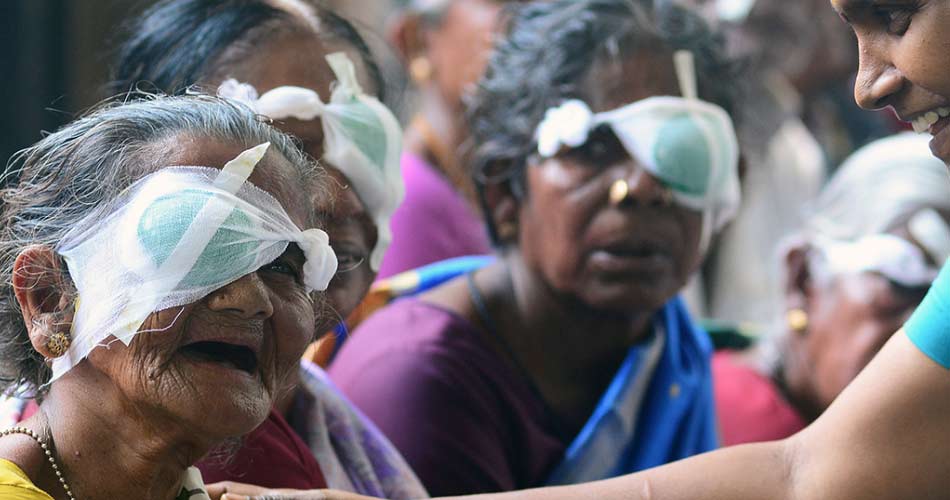
Yet how do businesses such as Aravind Eye Hospitals succeed in these challenging settings? "They have succeeded in developing business templates that can be easily replicated on a large scale for those at the bottom of the economic pyramid," says Ringov.
6 mechanisms for business template development
Businesses catering to those at the bottom face special challenges and conditions, including extreme resource scarcity and widespread lack of well-functioning institutions, among others.
Six major mechanisms can raise the likelihood of success when developing business templates in these challenging settings:
1. Institutional substitutes
The lack of well-functioning institutions – such as lack of protection of property rights, poor enforcement of contracts or missing labour, capital or product market intermediaries – makes it more challenging for businesses to operate in such contexts.
To overcome these institutional voids and increase the viability of their business templates, firms may internalise the services of missing institutions or outsource them to other bodies, such as local or international NGOs.
2. Cutting costs and risks
Extreme resource scarcity – such as poor education, low managerial skills and minimal disposable income – is another feature of markets catering to the very poor. Organisations that aim to grow at scale in such markets are more likely to succeed if they can deliver very large reductions in costs and risks for their potential customers.
3. Business model innovation
Business templates that are mainly based on technological innovation have often failed to serve the poor. To develop successful templates, businesses should focus less on delivering new-to-the-world technological innovation (it often implies high costs that cannot be borne by the poor) and focus instead on business innovation that overcomes resource scarcity and institutional failures.
4. 'Glocal' ['global' + 'local'] entrepreneurs
Multinational corporations are typically alien to local communities and thus may be unable to develop relevant products and services. Businesses are more likely to succeed in developing scalable business templates if they have a 'glocal' perspective, that is, they know and are committed to local communities, yet can also take a broader perspective beyond the original community they developed their solutions for.
5. Simplicity
The rate at which businesses can develop and replicate is also affected by the level of behavioural change they require on the part of customers. Businesses want to minimise the extent to which their model requires behavioural change. If the model requires substantial change in people's habits and norms, businesses will be more likely to overcome resistance if they position their products or services as status symbols.
Companies can also make their products more desirable by leveraging the power of early adopters or opinion leaders, such as well-respected community members.
6. Co-creation
Due to the dearth of disposable income in bottom of the pyramid markets, offering opportunities for local people to not only spend but also earn is often critical. If firms incorporate local people into their business templates as co-creators – for instance, as producers, not just consumers, the solution is more likely to be relevant and generate income, thus raising demand for the company's products or services.
3 mechanisms for replication success
Once businesses have succeeded in developing viable business templates for base of the pyramid markets, the next step is to attempt to replicate such templates at scale. Three key mechanisms contribute to successful replication:
1. Infrastructure building
The success of replication sometimes depends on factors that are beyond a firm's sphere of influence. Working with other interested parties, such as NGOs, foundations or local government, helps build the missing infrastructures, facilitating the scaling of its business templates. This ensures that infrastructure costs are not borne by the focal firm alone.
2. Visibility of activities
Local audiences might perceive high visibility as evidence of high profitability. Thus, demands for contributions from outsiders can hinder the growth of a new firm. For businesses to succeed in template replication, it is best to keep a low profile at the outset while the business still lacks the size to withstand external pressures and demands for illicit payments.
Once businesses are well-established, promoting and enhancing the visibility of their activities may turn beneficial and win new allies and partners.
3. Leverage by influential organisations
Entrepreneurs often get too attached to their idea and cannot easily cede control and develop the structures needed for the business to grow at scale. Yet when a business has already developed a viable template, it may scale faster if it works in collaboration with other influential organisations, such as government bodies, local or international NGOs, foundations or social impact investors. For instance, BRAC worked with international and national NGOs and foundations to successfully replicate solutions for poor consumers outside its home country (Bangladesh) in Asia, Africa and the Middle East.