Should we adapt our communication style to the context?
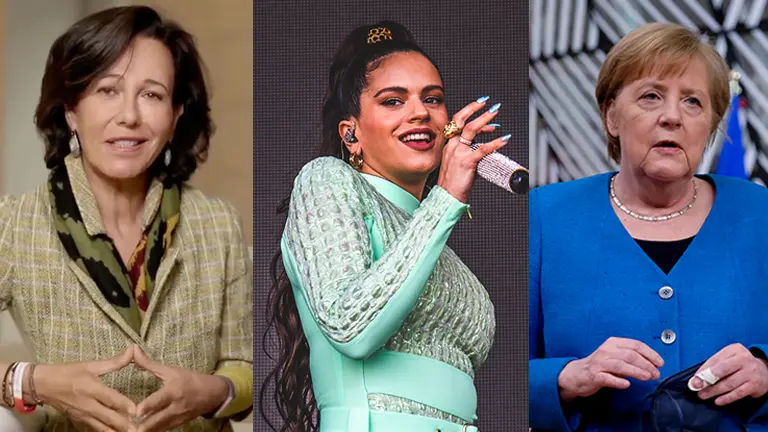
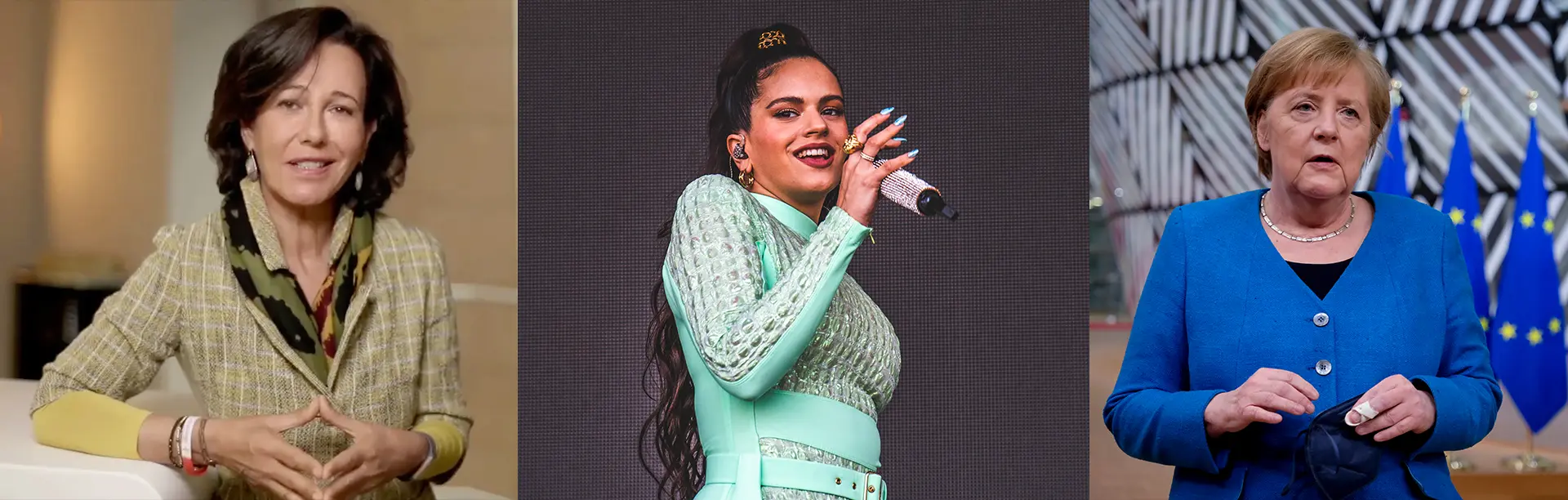
Angela Merkel, Ana Botín, and Rosalía are three outstanding women in their respective fields. By comparing their communication styles, we can learn how to adapt to different contexts and audiences.

Angela Merkel's memoirs have just been published. The German chancellor explains that when she bid farewell to politics in 2021, during the traditional military ceremony, she chose a song by Nina Hagen, a punk singer from the 1970s. It was a dramatic twist—Merkel, known for her reserved demeanor, ending her political career with Hagen’s ‘You Forgot the Color Film’ (Du hast den Farbfilm vergessen)!
It would be like Ana Patricia Botín retiring from the presidency of Banco Santander to the sound of a song by... Rosalía? Would that make sense? Would such a surprising gesture generate sympathy or criticism from the public?
The ways Merkel, Botín, and Rosalía express themselves are tailored to their audiences, objectives, and roles
I thought it could be an interesting exercise to compare the communication styles of these two great female leaders in politics and business and contrast them with another female leader from a completely different world—Rosalía, the undisputed queen of music. The ways these three women express themselves are tailored to their audiences, objectives, and roles. Let’s take a closer look.
Sobriety, sophistication, and passion
Angela Merkel and Ana Botín share quite a bit in common at first glance. Both communicate with clarity, avoiding unnecessary detours—their style is direct. Merkel, with her scientific background, bases her messages on data, her tone is always measured, grounded in analysis and figures. Similarly, Botín, as a business leader, employs a clear, results-oriented communication style. They also share the ability to convey credibility and trust: Merkel, to heads of state and the German and European public, and Botín, to investors, employees, and clients. In both cases, their audiences are broad and diverse. Both are influential and respected voices, whether in the political arena or the corporate world.
However, visually, there is an immediate distinction: Merkel embodies sobriety, with her easy-to-maintain bob haircut, minimal makeup, comfortable shoes, no jewelry, and understated outfits featuring straight trousers and collarless jackets. She exudes simplicity and restraint. Botín, on the other hand, exudes sophistication—her hair is always impeccably styled, and she pays attention to detail with accessories like designer handbags and silk scarves. Her wardrobe embraces more feminine silhouettes. Though never excessive, her style is fashion-conscious and warmer. This visual contrast is mirrored in their communication styles: Botín addresses topics such as sustainability and work-life balance (which some analysts suggest is partly an effort to distinguish herself from her father, who was more reserved and formal). This approach projects a more relatable and human image. Merkel, by contrast, has consistently avoided strong displays of emotion or anything too personal, which has sometimes led to perceptions of aloofness.
And what about Rosalía? At first glance, she appears to be the complete opposite of both. As an artist, she communicates through emotion and creativity—both in her music and on social media. Her visual style is bold, even provocative, and her way of expressing herself is familiar and highly engaging for her followers. Her messages are full of visual and verbal references to her personality, roots, and cultural identity.
The recipe for communicative success
Each of these women possesses remarkable communication skills, offering winning approaches depending on the context, audience, and specific objectives. If Merkel represents rationality and stability, Botín professionalism with empathy, and Rosalía creativity and emotion—when and with whom should a business leader adopt each of these styles?
- Sober and pragmatic (Merkel's style): Best suited for moments requiring calm and stability, such as during crises or when announcing a restructuring. Conservative audiences that prefer an emotion-free approach, such as government bodies or traditional boards of directors.
- Leadership-oriented and empathetic (Botín's style): Ideal for presenting future plans, launching a new business strategy, promoting internal cultural changes, or rolling out CSR initiatives. The audience may be company employees and stakeholders in situations where the message must be both rational and emotional.
- Creative and emotive (Rosalía's style): Perfect for engaging consumers, particularly for products where emotional connection is key, or for gaining visibility on social media, where authenticity and closeness matter. Also used in front of young or highly creative teams, and in general, any situation where the goal is to inspire, excite, and foster a sense of belonging.
A business leader cannot be confined to a single style. While remaining true to their personality, it is essential to adapt communication to the context. These women themselves have demonstrated the ability to adjust their style when the situation demanded it.
The ability to alternate communication styles demonstrates emotional and communicative intelligence
When Rosalía sings, she is pure emotion. Who could forget her spine-chilling rendition of ‘Me quedo contigo’ by Los Chunguitos at the 2019 Goya Awards? However, this emotional intensity doesn’t mean she lacks professionalism. In interviews promoting a new album, her explanations are thoughtful and well-prepared. For example, when she released Motomami—a project that fused sonic innovation with cultural messaging—she described it with precision: "This isn’t just a musical product but a conceptual experience." Anyone listening to her can see that she is not just an emotional artist but also a strategist—similar to Botín when she presents her vision for Santander’s future.
Merkel, too, demonstrated adaptability at crucial times. In a Bundestag speech in November 2019, she spoke about freedom of expression during a period of heightened tension due to the rise of populist movements in Germany and across Europe. Her words and gestures were more forceful than usual, delivering an ethical rather than purely technical message, which made her seem more approachable. Her most memorable moment, however, was undoubtedly her farewell song choice—Nina Hagen’s Du hast den Farbfilm vergessen. Hagen, like Merkel, was from East Germany, creating an emotional connection to her past. For once, Merkel "let her hair down" and showed a remarkably warm and relatable side. It was brilliant!
Even for leaders with a serious, professional, and reserved image, there are always opportunities to diversify communication and surprise their audience. The ability to alternate between communication styles demonstrates emotional and strategic intelligence—essential for connecting with diverse audiences and strengthening personal branding.