
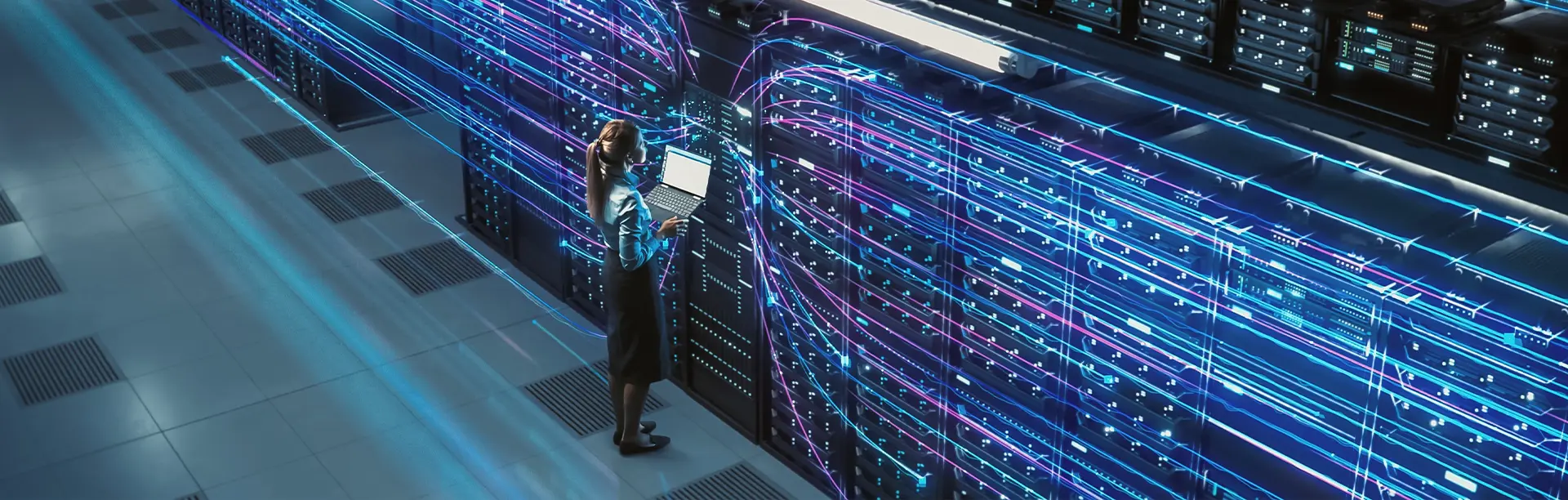
Big Data: The new oil and a new dictatorship?
Interdisciplinary knowledge, collaboration, and the ability to learn from mistakes will help us face the data-driven revolution.

The massive use of data for analysis, information processing, and decision-making (big data) is clearly one of the great revolutions of the 21st century. It is the “new oil” and a key fuel of today’s economy.
Data is a resource that has eclipsed oil or gold as the most valuable traditional commodities. A new way of living, working, and managing that generates exponential opportunities while also producing adverse and contradictory effects.
Today, there is ample evidence of the extraordinary impacts of big data, as highlighted in this report by Fundación Bankinter: improved processes, innovation in products and services through a better understanding of customer needs, acceleration of scientific discoveries, and advances in educational excellence and knowledge management.
A specific and highly relevant example has been its key contribution to the accelerated identification of COVID-19 vaccines, supported by the massive analysis of clinical data from previous viruses and the evidence generated in 2020.
On the other hand, there are potential harmful effects of big data that were anticipated years ago and are now evident and concerning.
Risks associated with Big Data
Experts like Javier Zamora warned nearly a decade ago about its dangers in areas such as cybersecurity, lack of privacy, or the misuse of sensitive information.
The great thinker Yuval Noah Harari also warns us today of its risks in this article. He states that "we are entering a new colonial era, the era of data colonialism."
He also mentions that we have been in a new technological cold war for some time, characterized by a “digital arms race” between China and the United States. Asian companies like Alibaba, Tencent, or Xiaomi compete against Western giants like Apple, Amazon, Facebook, Google, or Microsoft.
This environment presents risks of moving towards a certain “digital dictatorship” that could undermine individual freedoms globally, and where the lack of EU leadership in achieving some necessary consensus is evident. These reflections are not exaggerated and encourage us to address this complex context more decisively.
The documentary The Social Dilemma explains, on the other hand, what has already been evidenced in recent years: how social networks massively influence the creation of public opinion.
A digital environment often filled with too much adrenaline and poorly substantiated opinions. A context in which it is difficult to distinguish fake news from verified and quality information.
Hope or curse?
I have more questions than answers to this crucial issue. The matter is very complex, and I am not a technology expert. What is clear is that it is here to stay, and we must take advantage of its opportunities while addressing its adverse effects.
Today, there are positive starting points: its benefits are no longer the only consideration, and there is a growing social debate on the topic. This is very necessary to bravely and wisely face its risks and opportunities.
I believe that some classic elements will help us successfully manage this transformation: listening to multidisciplinary experts (not just technologists), gaining perspective, collaborating, learning from past mistakes and successes, or designing the best approach with multigenerational involvement and key stakeholders in this revolution.
As so often in history, the final success will depend on our collective and collaborative intelligence for managing such disruptive innovation with solid values and thinking about the common good.
I believe that this way, its evident benefits will consolidate, and we will move towards a more hybrid (humanistic and digital) society with greater quality of life, happiness, and general prosperity.
Experts warn us of how much is at stake in this matter in the coming years. Let’s hope we advance with fair winds on this important journey.