The heat is on insurers to mitigate disaster risk
October 14th marks the International Day for Disaster Reduction, held to promote a global culture of risk reduction. And after the hottest summer on record, the world needs to prepare for increasing climate extremes and their consequences.

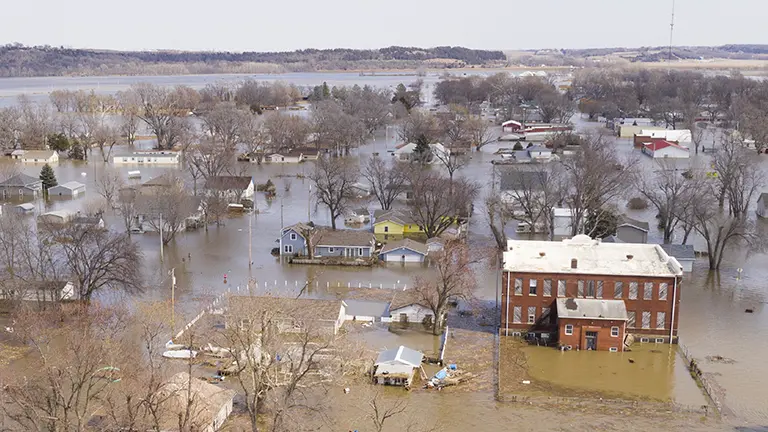
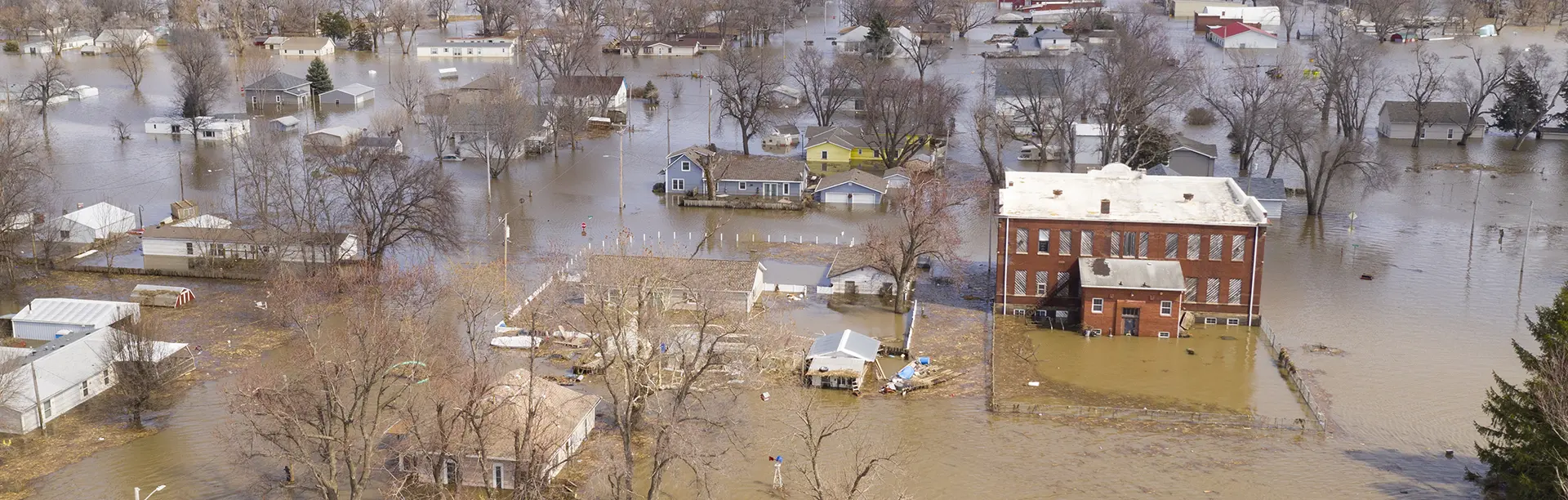
The summer of 2023 was described by one climate scientist as “absolutely gobsmackingly bananas”. Along with record-breaking land and sea temperatures, the year so far has seen local rainfall records lead to flooding in Europe, North and South America, Asia and Australia. Elsewhere, drier-than-average conditions have led to significant wildfires.
Crumbling infrastructure
The catastrophic consequences of failing to heed warnings in the face of these increasingly severe weather conditions were laid bare when two dams collapsed in the port of Derna in Libya after heavy rain. Whole neighborhoods were swept away and thousands of lives were lost – and engineers said they had been warning of the risks for years.
Conditions that were considered extreme will be more common in the future
In the US, the American Society of Civil Engineers estimates there are more than 2,300 ‘high hazard potential’ dams (those that could cause death or property damage if they fail) that don’t have emergency action plans in place.
“Climate change is increasing the frequency and intensity of natural hazards like storms that threaten dams,” says Hiba Baroud, associate professor of civil and environmental engineering at Vanderbilt University in Tennessee. “And these shifts don’t follow historical trends. Conditions that once were considered extreme will likely be more common in the future.
“Vulnerable dams and the risk of dam failure cascade through our economy and affect many sectors. It’s important to understand the direct and indirect costs when critical infrastructure systems like dams fail.”
Destroyed livelihoods
While large parts of the world struggle to develop or maintain the necessary infrastructure to contain record rainfall, others are urgently looking at measures to conserve rapidly dwindling water supplies. In southern Spain, the parched La Viñuela reservoir in Malaga is at just eight percent of capacity. Residents and tourists across the province continue to experience strict restrictions on water use that have been in place throughout the summer.
While parts of the world struggle to contain record rainfall, others try to conserve dwindling water supplies
Similar conditions were seen in Greece in March, when five regions reached dangerously low levels of reserves — only for the country to experience historic flooding in September, with some areas seeing up to 21 inches of rainfall in just 10 hours.
Each of these examples has a real and lasting impact on business and livelihoods: from olive oil producers to wine makers and the tourism sector.
Spiraling costs
In its report, ‘Disasters in Numbers: Climate in Action’, the Centre for Research on the Epidemiology of Disasters (CRED) outlined the appalling human cost of disasters: in 2022, 185 million people were affected and 31,000 lives were lost. There was also a significant financial price to pay - CRED estimated a cost to the economy of around US$ 223.8 billion in the same year.
And these costs are set to rise. In its 2022 ‘Our World At Risk’ report, the United Nations Office for Disaster Risk Reduction (UNDRR) estimated that the number of global disasters will increase to around 560 by 2030.
“In the face of global systemic risk, governance systems must quickly evolve and recognize that the challenges for the economy, environment and equality can no longer be separated,” says the CRED in its report.
The insurance industry, perhaps the sector most synonymous with the concept of risk, has a key role to play in mitigating the impact of natural disasters. But to be effective in managing unprecedented levels of risk, says former senior researcher at EsadeGeo Enrique Rueda-Sabater, the industry needs a major shake-up.
Unpredictable events
“The impact of climate change and other high-impact and even less predictable events, such as the COVID-19 pandemic, have shaken the profitability of catastrophe insurance offerings for both individual consumers and companies,” he explains.
“Losses due to natural disasters have increased significantly in recent years, probably at a faster rate than projected. Swiss Re data on claims from insured risks resulting from storms, floods and fires — but which are likely to be representative of the global evolution of claims from natural catastrophes — show particularly strong increases from 2005 onwards.”
Challenges for the economy, environment and equality can no longer be separated
And while the balance sheets of insurance companies are unlikely to be the first place the collective psyche directs its sympathies when considering the impact of disasters, the impact on society is undeniable.
“When property insurance becomes unavailable or too costly, some homeowners choose to go without,” says Alice C. Hill from the Council of Foreign Relations in the US. “That means they bear the entire loss should disaster strike, unless government or philanthropic aid materializes.
“If the damage makes their home uninhabitable, families move away in search of housing. The flight of families can cause schools to close and businesses to shutter, creating a downward economic plunge that starves local governments of needed tax revenues.”
Strategic challenges
The CERD says governance systems should evolve to deal with increasing disaster risk, and Rueda-Sabater agrees.
“The evolution of catastrophe risk coverage will depend in part on the availability of a reinsurance ‘cascade’ with government-sponsored pools, stop-loss commitments and other guarantees possibly on top,” he says.
“And in countries where the government supplements private reinsurance, this option may become more attractive to certain types of companies than in those where it does not.
“How the cost/benefit calculation of insurance coverage fits into a company's overall risk management program and how to manage the relationship with insurers will become increasingly important strategic challenges.”