Betting on reindustrialization to safeguard the European social model
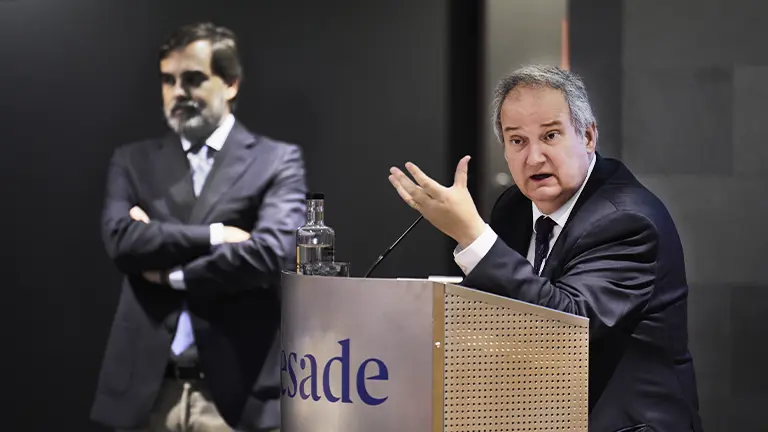
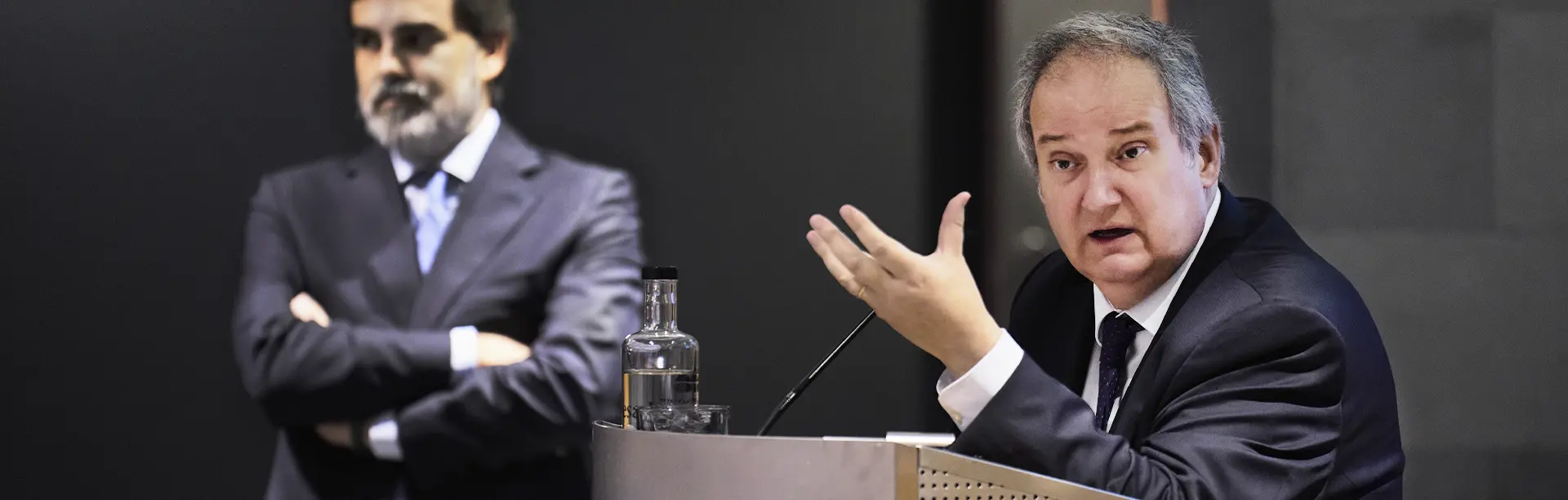
A competitive industrial base is essential to protect the European political and social model. This was the message conveyed by Spain’s Minister of Industry and Tourism, Jordi Hereu, during his address at Esade.

Geopolitical instability, rapid technological advancement, and the urgent ecological transition have placed many countries at a crossroads. As these forces converge, global supply chains are being reshaped. The pandemic also marked an economic paradigm shift, highlighting the need to strengthen domestic production capabilities. In this context, a new era of strategic reindustrialization is emerging as a major opportunity.
Spain is among the countries that could seize this opportunity. Spain's Minister of Industry and Tourism Jordi Hereu shared this perspective following the annual meeting of the Assembly of Members of Esade Foundation, where he emphasized the need to reinforce the material foundations of the European social model and position Spain as an industrial hub for the continent. In his speech, he offered a diagnosis of the current landscape along with an overview of the Ministry’s priorities.
The idea that geopolitics is intertwined with economics has taken hold
Hereu, an Esade alumnus, began by evoking the spirit in which the school was founded in 1958: to train business leaders who are aware of the broader societal impact of business beyond profit. In a time of “dizzying transformation,” he reaffirmed the relevance of those values: “Many things will continue to change, but staying true to our values is more important than ever,” he said. “In today’s world, what Esade represents is even more meaningful.”
Toward strategic reindustrialization
Spain needs more industry. But reindustrialization is not merely an economic goal; it is a response to hard-earned lessons from recent decades. “During the 2008 crisis, we saw that industrialized societies were more resilient,” Hereu recalled. And in 2020, amid the Covid-19 pandemic, Europe experienced the urgency of reducing dependence on distant supply chains for items like face masks and ventilators.
If these examples weren’t enough, today’s turbulent context has forced industrial policy to become “more proactive and geopolitically aware.” In contrast to the previous model, where global value chains were long, flat, and seemingly secure—and where the key was to specialize based on competitive advantage—the world now demands the inclusion of strategic autonomy in economic planning. “The idea that geopolitics is intertwined with economics has taken hold,” he insisted.
In a global context of democratic backsliding, we need to actively support the European social model
In this effort, the minister highlighted the role of the EU’s Next Generation funds as a powerful lever for progress. Leveraging these resources, Spain must increase its industrial capacity, value-added output, and export strength. “There will be no European project unless we win the battle of building productive capacity—this is its material foundation,” he warned. In a global context of democratic backsliding and authoritarian momentum, he emphasized the need to actively support the European social model, whose survival is far from assured. The key to its endurance lies in building a competitive economic system.
Transforming tourism
The minister also addressed the challenges facing the tourism sector, a vital part of the Spanish economy. “We must transform tourism to maintain our leadership,” he stated. This transformation involves diversifying the offering, reducing destination concentration, mitigating seasonal fluctuations, digitizing the sector, and improving the distribution of tourism revenues. “Today, revenue is growing faster than tourist arrivals, and that’s a positive sign,” he noted.
Toward more balanced growth?
Hereu pointed out that productivity and investment attraction remain key challenges for Spain’s economy, but today they are being tackled within a more balanced growth model than in 2007: less dependent on construction, with stronger private consumption and a greater share of exports.
He also noted that Spain’s manufacturing sector grew by 3.6% last year and now accounts for 16.7% of GDP—surpassing the tourism sector, which stands at 12.3%. Among industrial priorities, he cited the energy transition and digital transformation as essential to enhancing the competitiveness of the Iberian economic model—including Portugal—as part of Europe’s collective effort.
He further stressed that crafting industrial strategies in collaboration with the relevant sectors is just as important as having the funds to implement them. “In turbulent times like these, what works is having clear goals and strategies to achieve them,” he asserted.
Europe in the face of trade wars
The Ministry’s strategy also includes supporting the growth of SMEs—ensuring they remain in Spain as they scale—promoting industrial clusters, addressing the challenges of the energy transition, and opening new markets amid ongoing threats of trade wars.
Regarding tariffs imposed by the new US administration and ongoing negotiations to prevent a trade escalation, he urged against naïveté and called for a recognition that transatlantic relations have changed.
Defense as an industrial driver
On the subject of security and defense, he reaffirmed Spain’s goal of reaching defense spending of 2% of GDP, in line with NATO commitments and the broader aim of achieving European strategic autonomy. In his view, investment in defense should also serve as an industrial driver that boosts other key sectors, such as technology.
Can Spain become Europe’s industrial hub?
Finally, he emphasized the importance of advancing the approval of the new Industry and Strategic Autonomy Law to provide all these initiatives with a coherent framework tailored to today’s realities. “In the European project, Spain must step into the role of industrial hub. It can do so by leveraging its location, the opportunities presented by renewable energy, its talent, its sense of purpose, and its tradition,” he concluded.
The minister also underscored the urgency of the moment, shaped by geopolitical and technological disruptions that will define the coming years: “Now is the time to lay the foundations for the industry of the decades to come.”