Why is the Sahel so important for Spain and the EU?
A key region between North Africa and sub-Saharan Africa, the Sahel faces profound challenges, but also unique opportunities.

The Sahel region is not only a transit zone, but also the central node between North Africa and sub-Saharan Africa, stretching from the Atlantic to the Red Sea. Its geographical location makes it a key point for trade and migratory flows, as well as for the security of the continent. For Europe, and in particular for Spain, its proximity to the Mediterranean also makes it an important point of geopolitical interest .
Thus is reflected in the report The Sahel: present and future scenarios for the external action of Spain and the EU, produced by EsadeGeo researchers Angel Saz-Carranza, Alba Marí Sánchez and Laia Serrano i Sorroca, who have explored the various dimensions of the region, from its complex situation of instability to the possibilities of cooperation in key sectors. And also the implications for the external action of Spain and the EU.
Beyond its strategic location, the Sahel has other qualities often overshadowed by social and political instability, and its vulnerability to the effects of climate change. It exports gold, oil and iron, and has significant agricultural, commercial and renewable energy potential.
A growing pole of interest in foreign policy
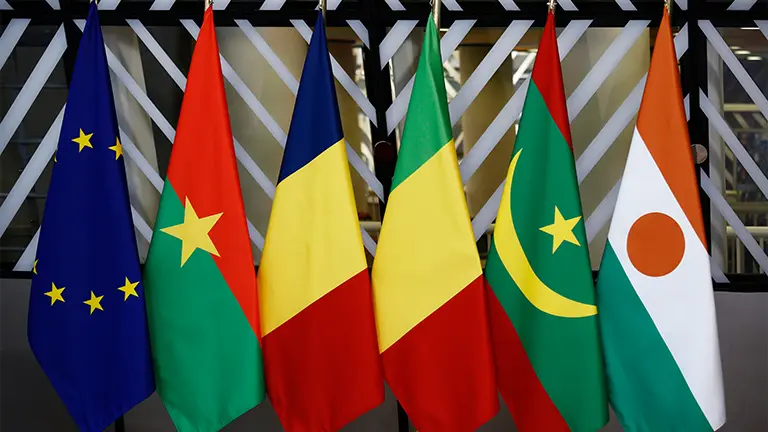
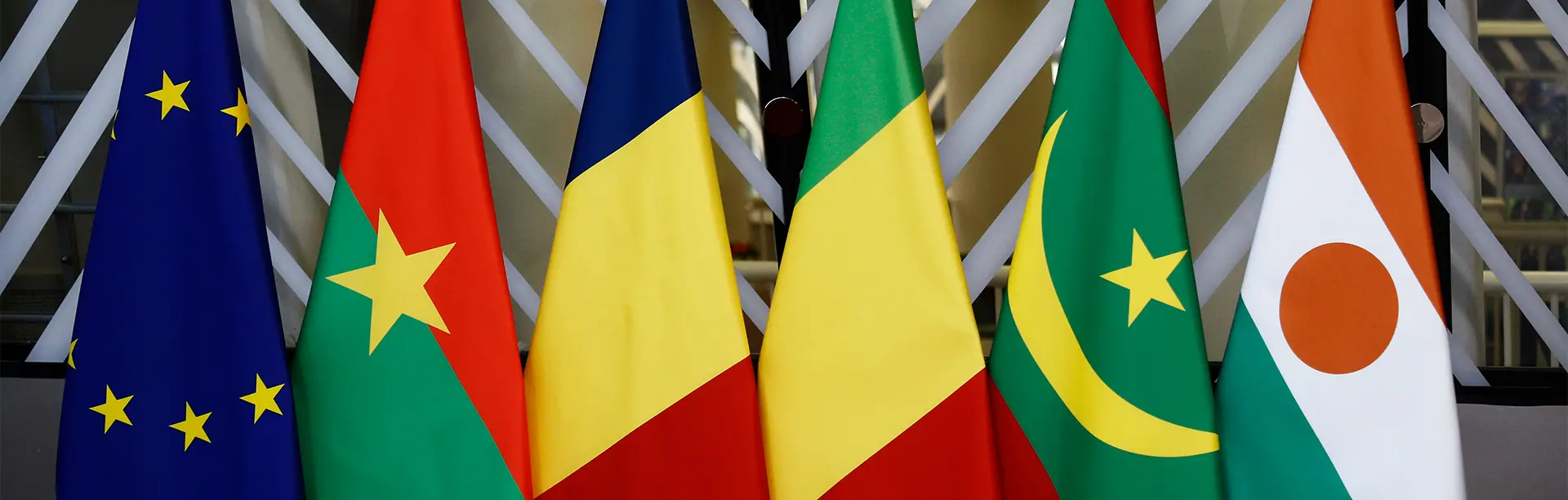
After more than four decades of relations, in recent years the EU has deployed diplomatic and cooperation efforts with initiatives such as the G5 Sahel, a coalition formed by Burkina Faso, Chad, Mali, Mauritania and Niger, to coordinate actions in the areas of security, economic development, trade and governance. The region has also benefited from the intervention of European missions aimed at combating terrorism and organized crime, and strengthening local institutions.
However, the withdrawal of actors such as France—whose past colonial and post-colonial domination has generated a strong backlash against the local population—and the growing presence of other countries in the region pose new challenges.
In recent years, Russia has consolidated its position in countries such as Mali or Burkina Faso, offering security support - through the Wagner Group, reconverted into the Africa Corps after the death in 2023 of its leader, Yevgueni Prigozhin - in exchange for preferential conditions in the extractive industry.
For its part, China has been a key player in infrastructure investment and continues to expand its influence through trade and resource deals, such as the construction of a major oil pipeline in Niger.
In turn, emerging regional powers such as Turkey have strengthened their relations with Sahel countries, using both religious and cultural diplomacy and humanitarian assistance to expand their influence, and positioning themselves as one of the main arms exporters in the region. Persian Gulf countries such as the United Arab Emirates and Saudi Arabia have also built bridges with the region.
This multipolar geopolitical landscape underscores the strategic importance of the region and the international competition to gain influence in a territory with high potential, but with significant challenges ahead.
Factors of instability in the Sahel
The region is currently facing a series of structural challenges that fuel its instability. The great imbalance between urban and rural areas—where the presence of the state is practically non-existent and there is a lack of basic infrastructure and high insecurity—is a major cause of social unrest and lack of internal cohesion. Moreover, there is an increase in ethnic conflicts between the north and the south, which have their roots in the colonial period and former slavery networks. The result is increased state fragility, coups d'état and military governments.
This situation has led to an increase in the presence of jihadist groups in northern Mali and nearby regions, which has multiplied tensions, making the region one of the most affected by terrorism worldwide. However, the authors warn that, "in the Sahel, the border between the jihadist fighter, the armed bandit and the one who takes up arms to defend his community is blurred".
Increasing forced migration due to these factors also poses urgent humanitarian challenges that are attracting international attention.
The role of the EU in the Sahel
The European Union has been playing a relevant role in the Sahel for years, especially in terms of security and defense. However, the dominant role of France within the European strategy, coupled with the growing anti-French sentiment in the region, may have limited the effectiveness of these efforts.
The challenge in the coming years is to find a new balance and rethink the strategy. The authors of the report call for a focus not only on security, but also on socio-economic aspects that directly address its causes. These include cooperation in key areas such as agriculture, education, health and the strengthening of state structures, especially in rural areas.
A leadership opportunity for Spain
In this context of reconfiguration, Spain has the opportunity to take a more active role, taking advantage of its good reputation among the countries of the region. In addition to its geographical proximity, Spain's participation in other international initiatives in Africa and its historical relationship with several countries in the region give it a certain advantage in establishing bilateral alliances, as well as in leading the European initiative in the region.
Spain's role could be decisive in priority issues such as migration management and security and, in a scenario of greater stability, could also provide opportunities in other areas such as renewable energies, investment in infrastructure and trade.