Tourism in Spain: Can the present model continue?
Tourism is Spain’s contributes to 11.6% of GDP in Spain but as the backlash against it from residents grows, does the model need to change in order to survive?

In the first four months of 2024, spending by international tourists in Spain increased by 22.6% on the previous year. Over the same period, the number of visitors increased by 14.5%, with 23.9 million tourists visiting Spain’s popular destinations.
In a January 2024 report on the Spanish tourism sector, Bank of Spain noted: “The importance of the tourism sector for the domestic economy and at an international level is widely acknowledged. Tourism is the country's main productive sector: in 2022 it contributed 11.6% to GDP and 9.3% to employment.”
Not welcome
But despite the €31.5 billion spent by visitors to Spain between January and April alone, the news of the increase is not being universally welcomed.
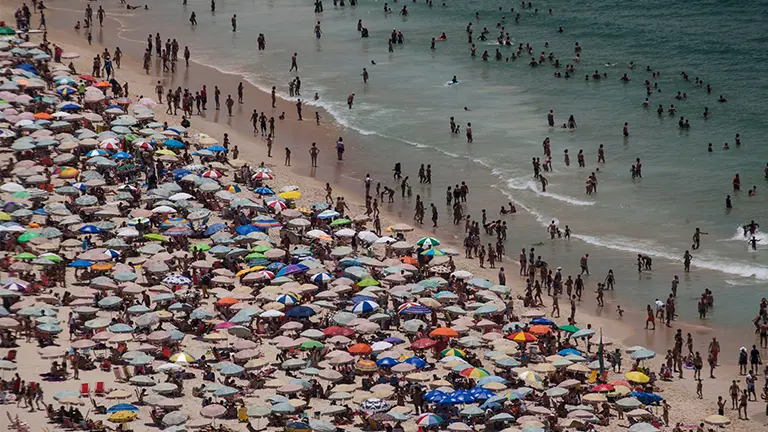
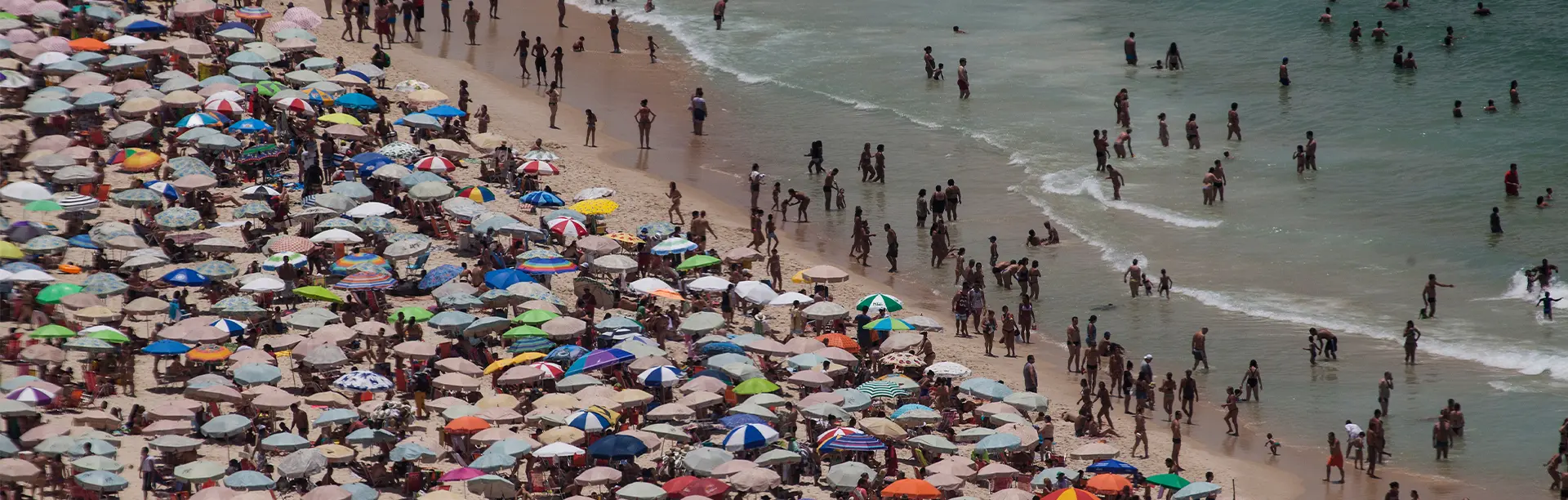
Protests in popular destinations such as the Balearic Islands and the Canary Islands have seen residents call for an end to mass tourism, with placards urging the world to consider the people who live in holiday hotspots all year round: “SOS Residents”, “People live here,” “My Misery, Your Paradise”, “We don’t want to see our island die.”
In further protests in cities including Barcelona and Malaga, tactics to dissuade visitors include fake signs being placed on popular beaches — written in English — warning visitors to stay away due to dangers such as falling rocks or an influx of jellyfish.
Transformative roots
The roots of the tourism sector in Spain lie in the development boom of the 1960s, as Manuel Alejandro Hidalgo, professor of Applied Economics at the Pablo de Olavide University and a researcher at EsadeEcPol, explained in a recent article.
“The construction of infrastructures to attract tourists and the rediscovery of Spain's historical heritage contributed to the ‘developmentalism’ of the decade,” he says. “Tourism, fundamental to the Spanish economy, generated key revenues and transformed society.”
The dependence of some regions on the tourism sector has caused a deterioration in their GDP per capita in the last decades
However, while the tourist boom brought about exceptional growth, increased productivity, improved the living standards of Spaniards and enabled the rediscovery of Spain’s cultural heritage, the areas that came to rely on tourism have experienced an overall negative impact.
Diversify to survive
“The mass tourism of recent years has generated saturation and a certain amount of weariness in the most touristic communities, which requires reflection on the wider imbalances generated by this activity,” says Hidalgo.
“The Canary Islands and the Balearic Islands have experienced a deterioration in their GDP per capita in the last three decades, which is mainly explained by their dependence on the tourism sector. In contrast, regions with more diversified economies have had a more favorable economic performance.”
To even out the spread of visitors and help to ensure the stability of the more popular holiday destinations, a change in the habits of tourists could be embraced. Continuing to focus mature coastal destinations could see them become the victims of their own success.
Pedro Aznar, Associate Professor in the Department of Economics, Finance and Accounting at Esade, notes that some habits are already shifting. "After covid, tourism experienced a strong upward rebound but with a clear change in consumer patterns, with the difference that people are now committed to a more experiential way of doing tourism”, he declared in the national press. In that sense, Spain has an incomparable value, but the responsibility to properly manage the tourist offer remains.
Short-term gain, long-term pain
The growth in platforms such as Airbnb and others like it has helped to facilitate this change in consumer patterns, opening up destinations to tourists that were previously the preserve of local families and workers.
While the vacation rental platforms have repeatedly been criticized for causing a rise in rents and a shortage of long-term housing, their spread to residential areas can bring benefits. As Hidalgo notes, for every 10-room increase on Airbnb, a new restaurant opens and generates an average of eight jobs in the neighborhood.
“This effect is not limited to the immediate surroundings of the apartments, extending to areas outside the city center,” he adds. However, he warns that the short-term gains can be significantly outweighed by the long-term impact on the economy.
Tourism is a labor-intensive sector that requires few qualifications and generates relatively high returns for workers
“The opening of new businesses may displace other establishments that were not previously oriented to tourism. The researcher Ivan Kožić has conducted an important study on this development, which reduces the long-term growth of a region or country.
“Tourism is a labor-intensive sector that requires few qualifications and generates relatively high returns for workers. The most immediate impact is a reduction in the level of education, and this undermines long-term economic growth by displacing other sectors that need a greater supply of skilled labor.”
Sustainable solutions
For the tourists viewing the protests from afar, there will be understandable concern about visiting an area where they are so vocally and demonstrably unwelcome. And for the one in ten citizens in Spain who rely on visitors for their income, the backlash may seem counterproductive.
“For many, it is incomprehensible that a population that lives from a certain economic activity can rebel against it,” Hidalgo acknowledges. “But it is not surprising that a certain part of the population of these regions sees this sector as a long-term limit to their well-being.”
As the protestors note, their homelands and islands have finite resources and one person’s paradise can be another’s misery. But to preserve homes, land and the natural resources that Spain is renowned for, the country needs to step back and take a much wider view of tourism’s impact on education, skills and sustainable development.
“Only through a thorough analysis of these issues can we find effective solutions to improve the country's competitiveness and economic development in the long term,” Hidalgo concludes.