
Is the Renaissance model the new competitive professional profile?
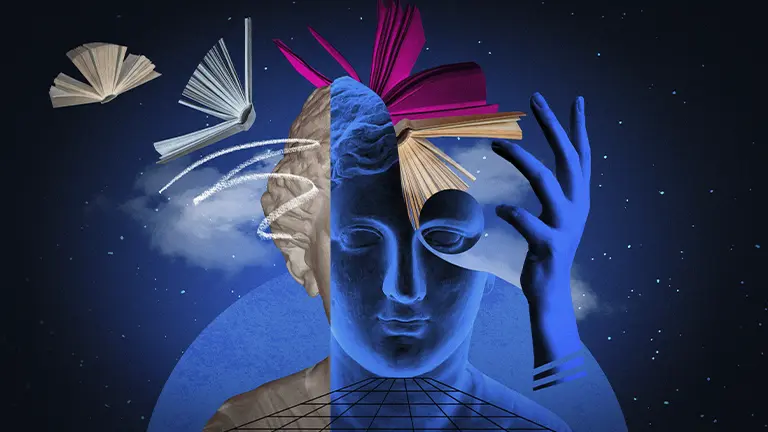
In a context of uncertainty and constant change, the Renaissance model re-emerges as an inspiration to build more versatile, connected and aware professional profiles.
In today's highly complex era, career paths have become less linear and unpredictable. But this instability also hides the opportunity to rethink career development and what kind of profile we need to lead our present and future. Is it possible to stop seeing uncertainty as a threat and start using it as a lever?
As Carmen González, Roque Adrada and Jordi Molina point out in Harvard Deusto Business Review, the Renaissance can offer us some clues: it was a time of radical transformation where openness to knowledge, interdisciplinarity and holistic vision marked the path of thinkers, inventors, artists and new leaders. Today, that same Renaissance spirit can inspire us to redefine our path. What if the most competitive professional of the 21st century were a new version of homo universalis?
The skills of the next 10 years
Today's challenges are not only technical; they are also fraught with biases or obsolete mental models that continue to reward linearity. But the current context demands something else: dynamism, constant relearning, an open and creative mindset, and the flexibility to change course.
These skills are no longer an aspirational desire but an unavoidable horizon. The World Economic Forum forecasts that 39% of professional skills required in the labor market will change by 2030.
Against this backdrop, Adrada, González and Molina propose a Renaissance-inspired professional development model with a clear structure: a robust foundation and three central pillars. A model that is projected as a useful aspiration for professionals who seek to evolve, not simply adapt.
The keys to professional renaissance
In seismic zones, the safest buildings are not the most rigid, but those with solid foundations and structures that yield so as not to break. What would an anti-seismic professional profile look like?
Locate your lighthouse
We cannot control everything, but we can control where we are going and why. It all starts by defining a purpose, understood not as a simple declaration of intentions, but as a definition of the very course on which to orient our strategic decisions.
Purpose connects our values with our long-term goals, allows us to align who we are, how we are and what we do. In an uncertain context, having this "lighthouse" - or "North Star," as some authors call it - not only provides direction, but also meaning: it allows us to discern which decisions are most in tune with ourselves.
But purpose is not discovered all at once. It is a process of trial and error, of deep self-knowledge and interaction with the world. As Terri Trespicio said, we don't find our purpose by thinking about it, but by acting.
From versatility to polymathy
In the Renaissance, the great professional aspiration was to master several disciplines. Today, that same ability to move between disciplines and connect with diverse knowledge becomes a special quality. Polymathy is not only versatility, it is the strategic ability to combine technical knowledge, critical thinking, creativity and human sensitivity.
How to develop it? The main driver is curiosity and a beginner's mentality. That "wanting to know more" can become a competitive advantage for individuals and professional teams. Learning and unlearning with agility is what allows us to navigate changing scenarios and generate value even when the rules change.
Collaborative networks: the facilitators
In a networked economy, careers must be networked too. Mentoring by people we admire and trust, strategic networking and meaningful alliances are key levers for career development. They are facilitators capable of providing vision and pointing out new doors or viable scenarios.
As Herminia Ibarra points out, it's not about collecting contacts, but about building relationships with intention and depth. The things that AI cannot replicate, such as active listening or human intuition, will be the most valued in an interconnected world. Knowing how to collaborate, co-create and be guided by others is part of the new art of progress.
Reading and anticipating: the Machiavellian vision
In addition to having a direction, it is also necessary to know how to read the map: to have strategic vision, defined as the ability to interpret the context, anticipate scenarios and detect opportunities.
In The Prince, Machiavelli wrote that he who adapts his actions to the "spirit of the times" is the one who manages to prevail. That is the task of today's professional: to develop a geopolitical, technological and social awareness that allows him or her to operate in a world where everything is interconnected and changing at breakneck speed. In fact, global events will have an increasing impact on the labor market and, therefore, on our decision-making.
Being good at what we do is not enough; we must understand where we do it, for what purpose and at what historical moment. Thus, uncertainty ceases to be an enemy and becomes a means. If we know how to interpret it, it becomes a source of advantage rather than a source of paralysis.
The universal professional
Being in control of the destiny we set for ourselves at a time when the professional career is not linear requires certain skills. The good professional of today is not the fastest or the most technical, but the one who moves in a network, masters several languages, understands the world and, above all, understands who he is.
It is about being reborn with other keys. Not to follow a straight line, but to build a path with intention and coherence, albeit in different ways. As in the Renaissance, we are going through a moment of rupture and at the same time of opportunity. The Renaissance model proposed by Adrada, González and Molina offers an updated review of the profile that emerged in a historical moment of profound transformations and with several points of contact with the present. It is an invitation to build courageous, broad, connected and conscious profiles.