How technology is transforming impact investing
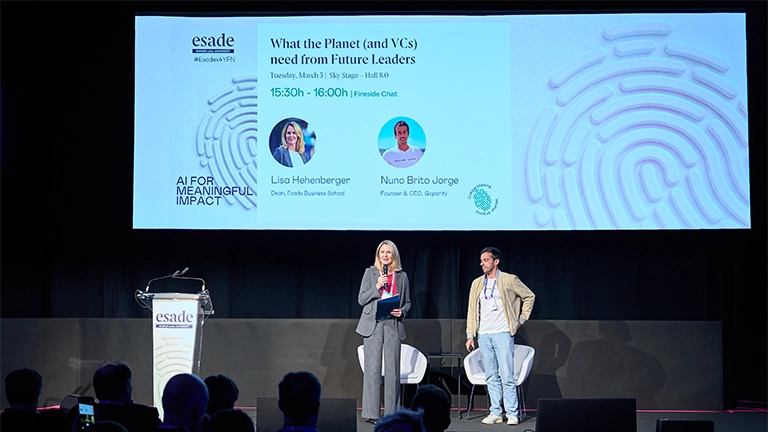
At the 2026 4YFN event, Nuno Brito and Lisa Hehenberger explored how projects with positive social and environmental impact are being transformed by new digital platforms—and by a new generation of future leaders.

Investors increasingly want their money to generate both financial returns and positive change. The global impact investing market exceeded $1.16 trillion in assets in 2024, according to the Global Impact Investing Network (GIIN). Proof that investors are seeking to address social and environmental challenges while making commercially viable investments.
Until recently, venture capital and impact investing were largely available only to wealthy investors or institutions. Digital platforms now enable individuals to invest directly in impact projects. This is where the investment platform GoParity enters the arena. GoParity is a tech-enabled crowdfunding platform that has opened impact investing to ordinary individuals and, in turn, changed how capital flows into sustainable projects.
It enables anyone to see and invest directly in sustainable ventures, ensuring their money is used to support the UN SDGs. For the projects, it can manage thousands of small investments and repayments. To date, GoParity has received investments totalling more than €56,000 from individuals across the globe.
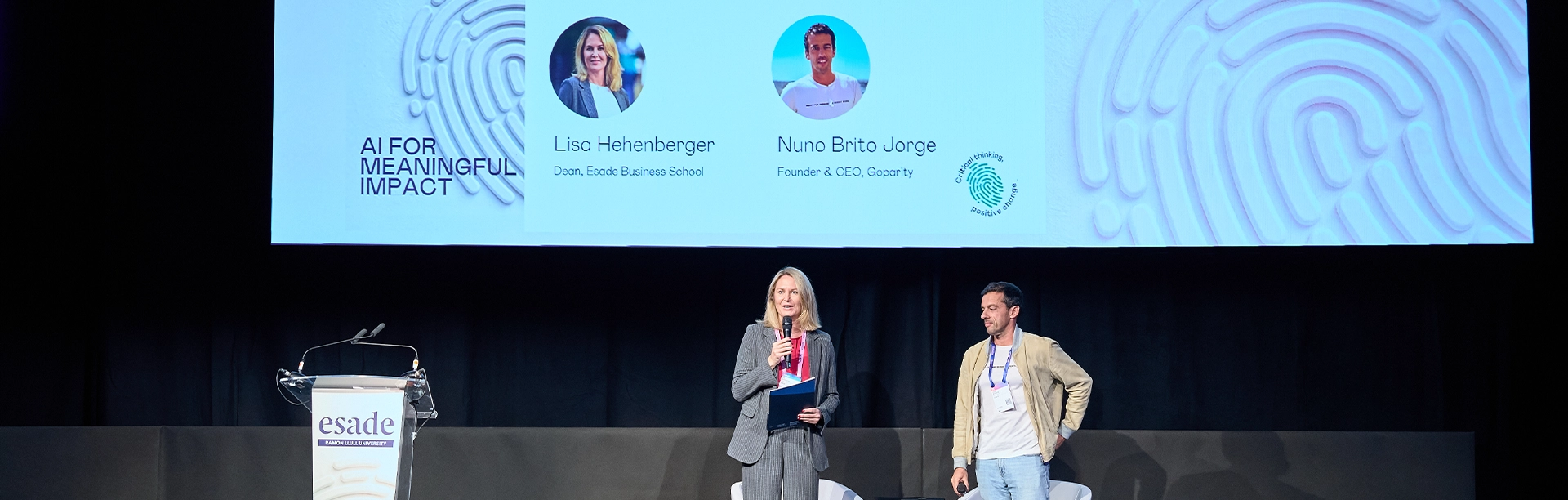
Nuno Brito, CEO of GoParity, spoke with Lisa Hehenberger, Dean of Esade Business School, at the recent 4YFN event in Mobile World Congress, about how technology is transforming impact investing and what future business leaders must do to address global social and environmental challenges.
“Technology powers people to be the new banks,” explains Brito.
In practice, this means individuals can lend directly to companies developing renewable energy, agricultural, or social innovation projects. The platform manages the technical side of the process, from payments to reporting. Crowdfunding platforms worldwide now raise more than $17 billion each year, reflecting the growing appetite for more democratic forms of finance.
Demand for this kind of investment is particularly strong among younger generations. A Morgan Stanley survey found that more than 97 per cent of millennial investors are interested in sustainable investing, highlighting the strong demand for investments that align financial returns with environmental or social impact.
Real-world impact: from solar energy to rural communities
A project in Uganda illustrates the power of this new investment model and how the positive effect can be broader than expected. Local cooperatives relied on diesel generators for backup power due to an unstable electricity supply. GoParity secured funding for solar panel installation, eliminating the need for unsustainable and noisy generators and ensuring an uninterrupted energy supply.
“This is already quite a positive impact,” says Brito, “but also, there’s an impact we didn’t expect. These stations became the only source of lighting at night, turning them into gathering points for the local community.”
This unexpected social benefit illustrates how sustainable investments can have a ripple effect.
Reliable electricity can transform daily life in rural areas. Off-grid solar solutions brought electricity to more than 490 million people worldwide by 2021, according to data from the World Bank and the Global Off-Grid Lighting Association.
Measuring impact is harder than measuring profit
While financial returns are relatively straightforward to calculate, measuring social and environmental impact can be more complex.
During the discussion, Hehenberger asked how GoParity measures the impact of projects in remote areas and reports back to investors. “It’s not only about generating a return. Investors also want evidence that the impact is real,” she says.
Different contexts and project types require varying levels of effort to gauge impact. Brito used solar power as an easy-to-measure project. “We know how much energy they are generating by looking at the integrated monitoring systems,” he explains.
Agriculture in Peru poses a different challenge. “It’s hard for us to know the impact of how many jobs we are creating,” says Brito. “So we work with established organizations on the ground who are pre-vetted. For example, we’ve been working a lot with Mercy Corps.”
GoParity evaluates projects through a detailed process that examines financial performance, business plans, and expected social impact. The company also tracks specific indicators, including CO₂ reduction, job creation, community empowerment, and women in leadership positions. Brito notes that the platform is also finalizing certification of its impact methodology with the United Nations Development Programme (UNDP).
Rethinking how we educate future leaders
The conversation also explored how business schools such as Esade should prepare the next generation of leaders. Brito highlighted that commitment, empathy, and resilience are key characteristics for guiding sustainable decision-making, and that education should move beyond traditional models focused on memorization.
In addition to theoretical learning, future leaders can benefit from opportunities to work on real problems and develop practical solutions. Exposure to real-world challenges can help students understand the complexity of issues such as climate change, inequality, and sustainable development.
At Esade, one approach is service-learning programs, in which students collaborate with organizations to address tangible social and business challenges. These experiences enable students to apply classroom theory while developing skills such as teamwork, problem-solving, and ethical decision-making.
The goal is for students to learn to use AI to strengthen their abilities, rather than substitute their independent thinking skills
The role of AI in business education
AI in education is a hot topic.
Hehenberger observed that many students already use AI tools when doing assignments. The challenge for business schools is to ensure that technology enhances learning rather than substitutes independent thinking.
At Esade, professors are experimenting with various scenarios for using AI in coursework. The goal is for students to learn to use AI to strengthen their analytical and creative abilities.
The future leader skillset
The discussion highlighted how technology, finance, and education are increasingly interconnected. Platforms like GoParity demonstrate how digital innovation can expand investment opportunities to a broader base while supporting projects that address global challenges.
At the same time, the entrepreneurs leading these initiatives require more than technical expertise. Commitment, empathy, and resilience continue to be vital qualities for anyone aiming to build businesses that deliver both financial returns and social value.
For business schools, preparing the next generation of leaders involves not only developing analytical skills but also fostering the mindset required to make a lasting impact.
In years to come, leadership success may be measured not only by profit but also by the value created for communities and the environment. The real challenge for business schools—and investors—is not simply funding the next profitable company, but nurturing more holistic leaders capable of building businesses that benefit both the economy and the planet.