
Bridging psychology and economics: What to learn from behavioral insights
The Esade Workshop on Behavioral and Experimental Economics brought together top researchers to explain the hidden drivers behind decisions at work, in markets, and in democracy.
By Do Better Team in collaboration with Anna Bayona, Tanushree Jhunjhunwala and Pedro Rey-Biel.
Imagine someone offers you $20 today or $30 in a month. Both economics and psychology study how people make this kind of choice, but they study it differently. In economics, a rational person might pick either option depending on their time preference—how much they discount future rewards. If your personal discount rate is high, taking $20 today can be just as rational as waiting for $30.
Psychology, however, finds that people’s decisions often show patterns like impulsivity or inconsistency: someone might intend to wait for $30 but then change their mind when the immediate $20 is right in front of them. New research in behavioral economics (via a concept known as hyperbolic discounting) brings these perspectives together, showing how real human behavior sometimes departs from the predictions of classical models.
What really drives human decision-making?
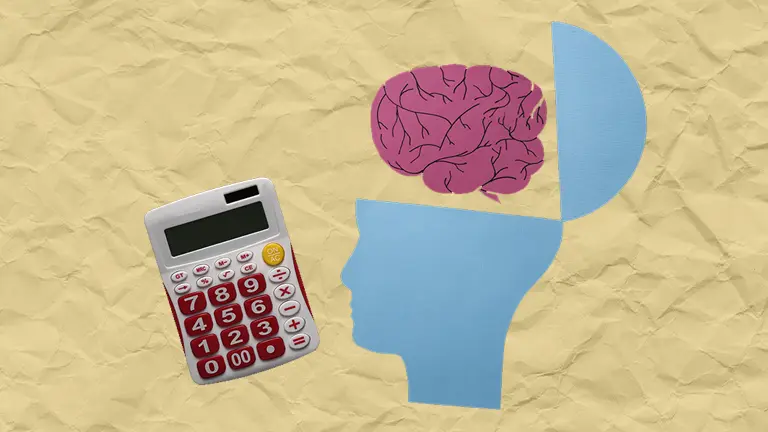
Behavioral economics brings psychology and economics together. Economic theory believes that people act rationally, weighing costs and benefits to maximize positive outcomes for themselves. Psychology, however, emphaasizes emotions, biases, and social influences, which can shape behavior in less predictable ways. So, when we have a decision to make, is it based on logic or feelings? Do we listen to our hearts or our heads? The reality is both.
Furthermore, a gap exists between theoretical models and the way human beings truly behave in economic contexts. Experimental economics can assist in testing these theories through controlled experiments and field studies to observe actual behavior.
The second edition of the Esade Workshop on Behavioral and Experimental Economics (EWBEE), organized by Esade Professors Anna Bayona, Tanushree Jhunjhunwala, and Pedro Rey-Biel, brought together in June 2025 leading international scholars to discuss the latest findings in behavioral economics. Daniel Traça, Esade’s Director General, welcomed participants and stressed Esade’s commitment in sponsoring research, especially when it has social impact. The professors’ research helped to explain how human decisions are influenced by context, bias, expectations, and other variables. New findings are evolving our understanding of decision-making—not just in academia, but in the real world, in business, public policy, democracy, and daily life.
Fairness isn’t just moral; it guides our choices
Mathew Rabin, from Harvard University, argued in his keynote speech that when allocating resources, people often face conflicting goals: maximizing their own gains, helping others, promoting equality, supporting the worst off, or avoiding being left behind. His presentation emphasized that people’s expectations about these goals strongly shape how they behave. Because these motives can pull in different directions, it is useful to think of them as separate factors that interact in complex way—and expectations can shift how much weight people give to each one.
Fairness expectations are not just moral preferences but powerful drivers of economic decision-making
Rabin showed that the more individuals expect equality, the more they work to achieve it. His theoretical model, validated with experimental data, illustrates how expectations influence fairness-related behaviors: people reward kindness and punish unkindness because they anticipate and value fairness.
This dynamic can be seen in everyday situations, such as splitting a restaurant bill. If someone consumes less but is asked to pay equally, their expectation of fairness may drive them to object. Beyond such examples, expectations about fairness also influence workplace dynamics, negotiations, consumer protection, and the reception of public policies. When people believe they have been treated fairly, they are more likely to cooperate and accept outcomes; when they feel fairness has been violated, they may disengage or punish the other party, even at personal cost. In this way, fairness expectations are not just moral preferences but powerful drivers of economic decision-making.
Irrational us: Why we grab $20 today instead of $30 tomorrow
Why do so many of us prefer $20 today rather than $30 tomorrow? This is a classic example of time preferences. The paradox is that we are impatient when a reward is imminent, but more patient when it’s in the future, and traditional theories can’t explain this behavior because, logically, it makes no sense.
The University of Sydney’s Stephen L. Cheung presented new research that fine-tunes our understanding of this tendency. Cheung’s model shows how time preferences change under different conditions—for example, how ‘today vs. tomorrow’ decisions differ from ‘30 days vs. 31 days.’ The practical implications of these insights are relevant for businesses. Savings tools, subscription plans, and even wellness programs can be designed to account for present bias, subtly encouraging people to make better long-term decisions.
Another variable affecting decision-making is whether we are truthful or dishonest. Simeon Schudy of Ulm University examined truth-telling. Classic theory states that people are more inclined to lie or twist the truth if the result of doing so benefits them. Schudy’s work has revealed a more positive human trait—we are guided by moral cost. Sitting with a lie feels uncomfortable. People value honesty even if lying would bring them benefits. This recognition can help businesses and regulators design systems that foster honesty rather than treating all behavior as opportunistic.
The downfall of pretending to be skilled at work
Some of us love a challenge more than others. In the workplace, pulling off a tricky project can result in tangible rewards, but what if an employee takes on more than they can handle? Ester Manna, from the University of Barcelona, explored social image concerns. Her findings show that employees sometimes accept tasks they are unqualified for in order to appear competent. This tendency was especially true for men. The desire to gain recognition at work can backfire and manifest in poor performance, a reluctance to delegate, and unnecessary stress.
Managers can learn from this. The key is to foster a workplace culture where asking for help and being honest about limitations is valued as much as taking on challenges. That way, tasks can be matched to skills rather than being allocated to the biggest egos.
Recruitment discrimination fueled by uncertainty
It’s no secret that many groups of people are underrepresented in the workplace. But why? Is a lack of women at the board table a conscious, sexist decision by male peers? Not necessarily. Ashley McCrea, from the University of Exeter, studied how ambiguity aversion affects hiring decisions.
When employers lack experience with certain groups, such as women in male-dominated fields, they may avoid hiring them due to uncertainty about how they will perform.
Employers aren’t always biased out of prejudice but rather due to a sense of discomfort with the unknown
This subtle but powerful mechanism helps shine a light on persistent underrepresentation. Employers aren’t always biased out of prejudice but rather due to a sense of discomfort with the unknown. Recognizing this can have huge implications for creating policies that reduce this sense of ambiguity, opening doors for a more equal workplace.
Rethinking risk: The gambles we won’t take
Risk—the balance between what you could gain versus what you could lose—has a significant influence on decision-making. Economists typically use what’s known as the utility function model to predict choices in uncertain circumstances. Standard models assume people logically weigh probabilities against potential outcomes.
The keynote Antonio Penta, from Universitat Pompeu Fabra, has shown that yet again, logic doesn’t always dictate human behavior. He showed that risk aversion and the diminishing value of wealth are separate forces. What does that mean in real terms? To put it simply: Fear of risk and the value of money aren’t the same, so weighing them in the same utility function is misleading. Separating them explains puzzling behaviors—such as why investors often avoid risks that, on paper, look profitable.
Behavioral insights in markets and research
Other researchers applied behavioral economics to business and innovation. Alexandros Rigos (Institute for Future Studies and Lund University) developed a framework showing how cooperation and truth-telling evolve under different incentives. Individuals may develop personal preferences or habits that make them more likely to choose certain actions, even when these actions are not always objectively optimal, because these preferences help guide decisions in complex social environments. That’s why we always collaborate with the same trusted colleagues or stick with the brands we know, even when better options might exist—familiar habits make decisions simpler.
Markets aren’t just about numbers. They are shaped by human behavior, biases, and the way we process information
Familiarity was also a cornerstone of Johannes Hoelzemann’s research. Hoelzemann, from the University of Vienna, described the “streetlight effect”, which shows that when researchers focus on familiar, data-rich areas, they overlook potentially groundbreaking discoveries in less-explored directions. Familiarity with existing knowledge leads to a bias toward familiar ground, making it harder to explore less obvious directions.
In a similar vein, Jiahua Zhu from King’s College London highlighted how limited information about buyer dynamics in trade can in fact be beneficial to both buyers and sellers, in contrast to the common belief that more information is better.
Believing we hold more information than our peers can be detrimental. Steve Heinke from the University of Fribourg cautioned that investors often overestimate the advantage they gain from public news. Often, individual investors rush to trade in response to financial news such as a significant bank decision, a product launch, or similar. In reality, when individual investors do this, they often end up chasing the market rather than beating it—because everyone else already has access to the same information.
Together, these findings remind us that markets aren’t just about numbers. They are shaped by human behavior, biases, and the way we process, or misinterpret, information.
Democracy and collective choices
The workshop also explored democracy through a behavioral lens. The democratic systems we live in can profoundly influence both individual and collective behavior to a surprising degree.
Do you think you only stop trusting someone if they themselves let you down? That’s not always the case. Moti Michaeli, from the University of Haifa, demonstrated how political unrest erodes interpersonal trust—people’s trust in one another declined after the government implemented a controversial judicial reform in Israel.
We place trust in our systems of democracy, believing that voting results in fair outcomes. But does it? Marco Faravelli from the University of Queensland used US election data to highlight the risks of uninformed voting. He found, shockingly, that 40 percent of voters cast their vote without being fully informed about the candidate they supported. It is therefore crucial that institutions provide unbiased, trustworthy information to voters in a clear, accessible format, increasing the likelihood that voters will educate themselves before deciding whom to vote for. Otherwise, democracy fails.
Behavioral factors affect not only individual choices but also the health and efficiency of democratic systems
While Faravelli found that a lack of information can weaken the bedrock of democracy, David Hagmann, from Hong Kong University of Science and Technology, warned that individual-focused policies—such as awareness campaigns—can divert responsibility away from systemic reform. The well-meaning efforts of governments or NGOs that launch campaigns to encourage individual action, like recycling more or reducing plastic use, may have unintended side effects. While the focus is on personal behavior, people often pay less attention to the changes that should occur at the systemic level of regulation or infrastructure investment.
When it comes to bold systemic change, Morten Støstad from the NHH Norwegian School of Economics, showed that public support to certain policies is sometimes stronger than policymakers assume. He presented a global survey showing surprising levels of support for a coordinated billionaire tax. The striking data revealed that it’s not only less wealthy citizens in poorer countries calling for a billionaire tax, but also more affluent citizens, who stand to gain little from such a tax. The results, reassuringly, show that humans are concerned with inequality, fairness, democratic influence, and how resources are shared. The findings are in line with polls from G20 countries showing that even millionaires agree with taxing the super-rich to help fund public services and reduce inequality.
These insights underline how behavioral factors affect not only individual choices but also the health and efficiency of democratic systems.
From theory to practice: business applications
A side note of the workshop was the industry roundtable, supported by sponsors including BBVA, BeWay Consulting, Neovantas, and Banc Sabadell. Professors Marco Bertini and Ariel Fridman (Esade) and Karsten Hansen (Rady School of Management) joined business leaders to discuss how behavioral insights are shaping pricing strategies. The debate highlighted both opportunities and ethical concerns, underscoring why ongoing collaboration between academia and industry is so valuable.
Keeping research honest
The final keynote came from Esade Professor Uri Simonsohn, known for exposing high-profile cases of academic fraud. Simonsohn stressed the importance of pre-registration—formally registering research plans before collecting data—as a safeguard against bias and academic dishonesty. He argues that bridging the gap between theory and practice requires not only good ideas but also trustworthy science.
Understanding what drives our choices
The cumulative evidence showed clearly that decisions are never just about logic. Being human brings an array of softer, more subtle emotions that guide the path of our decision-making.
Bias can open or close the door on opportunities. Hiring practices, workplace culture, and promotions are all influenced by subtle and often unconscious psychological forces. The same behavioral patterns that drive small choices also influence how we save, invest, vote, and respond to policies.
- Compartir en Twitter
- Compartir en Linked in
- Compartir en Facebook
- Compartir en Whatsapp Compartir en Whatsapp
- Compartir en e-Mail
Do you want to receive the Do Better newsletter?
Subscribe to receive our featured content in your inbox.