

The role of business schools in the decarbonization journey
Business schools must lead by example in the fight against climate change, aligning operations with the values they teach. Achieving a shared framework for Scope 3 measurement is essential to this effort.

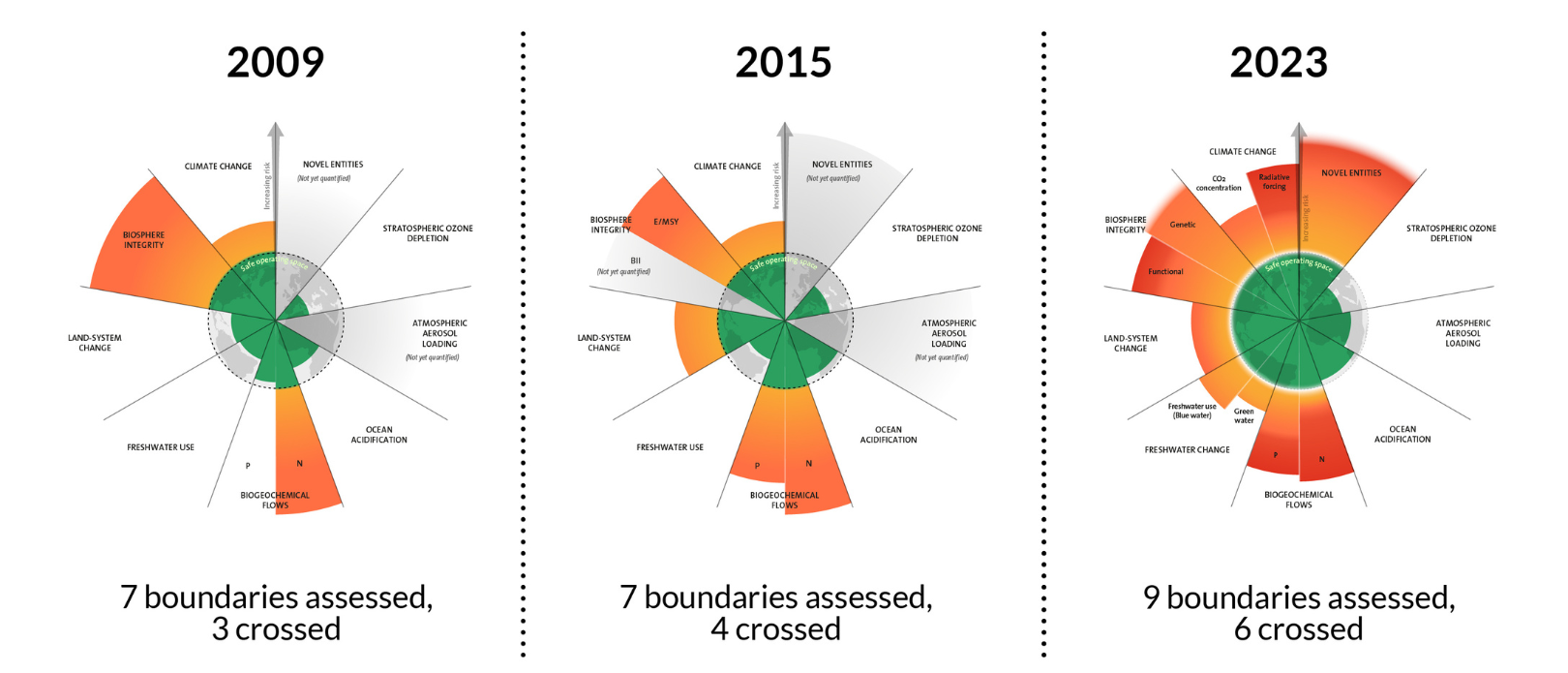
We are living in a state of climate emergency, as evidenced by the accelerating impacts of global warming and the degradation of critical Earth systems. One of the most widely accepted scientific frameworks to understand the limits of our planet is the Planetary Boundaries framework, developed by Johan Rockström and the Stockholm Resilience Centre.
This model identifies nine key Earth system processes, including climate change, biodiversity loss, and ocean acidification, that regulate the stability and resilience of the Earth. The framework defines “safe operating spaces” for humanity, beyond which there is a risk of destabilizing the planet.
As of the latest assessments, at least six of these nine boundaries have already been crossed, signaling a high level of risk for irreversible environmental change. Respecting these boundaries is critical to maintaining the conditions that support human life and the biosphere.
Why CO2 emissions are so relevant?
CO₂ emissions are directly linked to the transgression of the climate change boundary, one of the nine planetary boundaries. This boundary is based on the concentration of greenhouse gases in the atmosphere, particularly CO₂, which is the primary driver of global warming. Beyond climate change, CO₂ emissions also impact indirectly other boundaries—such as ocean acidification, as oceans absorb a significant portion of CO₂, lowering pH levels and threatening marine life; and biosphere integrity, as climate disruptions contribute to biodiversity loss.
CO₂ emissions are central to the planetary boundaries framework, not only as the main factor behind the transgression of the climate change boundary, but also through their cascading effects on multiple other Earth system processes. Reducing CO₂ emissions is therefore a foundational action for keeping humanity within a safe operating space.
The role of business schools
Although relatively small in global terms, the carbon footprint of the higher education sector is both measurable and strategically important—especially given its educational leadership role. Data from 537 UK institutions revealed they emitted more than 18.1 million tonnes of CO₂e in the 2020/21 academic year, representing around 2.3% of the UK’s total carbon footprint (The Royal Anniversary Trust, 2023). According to the same study, Scope 1 and Scope 2 emissions accounted for 7% and 5%, respectively, while Scope 3 made up a significant 88%. Within Scope 3, the largest contributors were Purchased Goods and Services (36.3%) and Transportation (24.4%), including business travel, commuting, and student mobility.
Integrating climate action into campus operations and procurement policies gives credibility to the values promoted in the classroom
Given this environmental impact, business schools should focus on improving building energy efficiency, adopting renewable energy sources, and exploring alternative heating systems. Comprehensive mobility plans can help lower travel-related emissions by encouraging walking, cycling, public transit, and ride-sharing, supported by infrastructure and incentives. In procurement, schools can reduce emissions by integrating carbon criteria, prioritizing plant-based food, and sourcing from low-carbon, local suppliers. Additionally, reducing food waste, implementing composting, and establishing effective recycling programs—while cutting down on single-use materials—are key steps toward a more sustainable campus.
To effectively address these impacts, institutions must first measure in order to act—using robust data to assess progress, inform decision-making, and support continuous improvement. However, a key obstacle lies in the absence of a standardized emissions reporting framework tailored to business schools. The sector is characterized by wide variation in methodologies and the scope of data included (Helmers et al., 2021; Herth & Blok, 2023). This inconsistency, especially in Scope 3 emissions, makes it difficult to compare institutions and set collective targets. Many schools report Scope 3 emissions only partially—focusing on certain categories such as business travel or commuting—while omitting others like procurement or capital goods. The development of a shared, sector-specific reporting framework is therefore essential to ensure transparency, comparability, and credibility in the decarbonization efforts of business schools and universities worldwide.
Measuring our climate impact
We recently conducted a study on the environmental reporting practices of top business schools, focusing specifically on how they account for their climate impact. Our analysis examined the top 50 institutions featured in the Financial Times’ Carbon Footprint category for both the 2024 Masters in Management and the 2025 MBA rankings. After consolidating and removing duplicates, we arrived at a final sample of 83 business schools across four continents.
To enable collective progress, business schools must move toward a shared framework for Scope 3 measurement
Among these institutions, 84% (70 schools) reported some level of Scope 3 emissions measurement, reflecting a growing recognition of the importance of indirect emissions. The vast majority (85%) use the GHG Protocol as their reporting framework, although 11% did not specify the standard applied. Transportation-related emissions were the most frequently reported: 85.7% included business travel, 81.4% employee commuting, 52.9% student travel, and 48.6% student commuting. Other commonly reported categories included waste management (75.7%), purchased goods and services (70%), capital goods (52.9%), and energy-related activities (48.6%). Despite this progress, only 12.9% of the schools reported comprehensively across all major Scope 3 dimensions, and just 30% covered the two largest categories: purchasing and mobility.
To build credibility and enable collective progress, business schools must move toward a shared framework for Scope 3 measurement—one that defines a common set of emission categories and provides clear, practical guidelines tailored to the specific context of higher education. Encouragingly, some leading institutions are already taking steps in this direction. The AERO network (Alliance for Environmental Responsibility in Business Schools), launched in early 2025, brings together eight European schools—including Esade Business School (Spain), ESSEC Business School (France), Kozminski University (Poland), SDA Bocconi School of Management (Italy), Stockholm School of Economics (Sweden), University of St. Gallen (Switzerland), Vlerick Business School (Belgium) and WHU - Otto Beisheim School of Management (Germany) —to collaborate on operational decarbonization. One of AERO’s main initiatives is the development of shared Scope 3 measurement guidelines, aiming to harmonize reporting practices, improve data quality, and foster accountability across the sector.
A unique responsibility
Business schools have a unique responsibility in the fight against climate change. We are educating the next generation of leaders, policymakers, and entrepreneurs—those who will shape the strategies and decisions of tomorrow’s organizations. We need to lead by example in how we operate, demonstrating that sustainability is not only taught but lived. Integrating climate action into campus operations, emissions management, and procurement policies gives credibility to the values promoted in the classroom. In this sense, decarbonization is not just an operational goal—it is a pedagogical imperative. By aligning what we teach with how we act, business schools can play a transformative role in accelerating the global transition to a low-carbon economy. After all, as Gandhi said, “Be the change you want to see in the world.”