How NGOs can collaborate with youth activism
NGOs are no longer the sole leaders of social causes. They are taking on a new role as facilitators and amplifiers of youth activism movements, working jointly on social transformation initiatives.

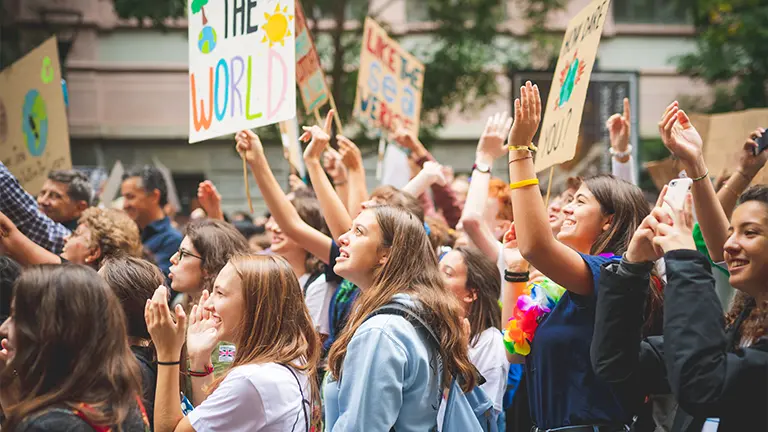
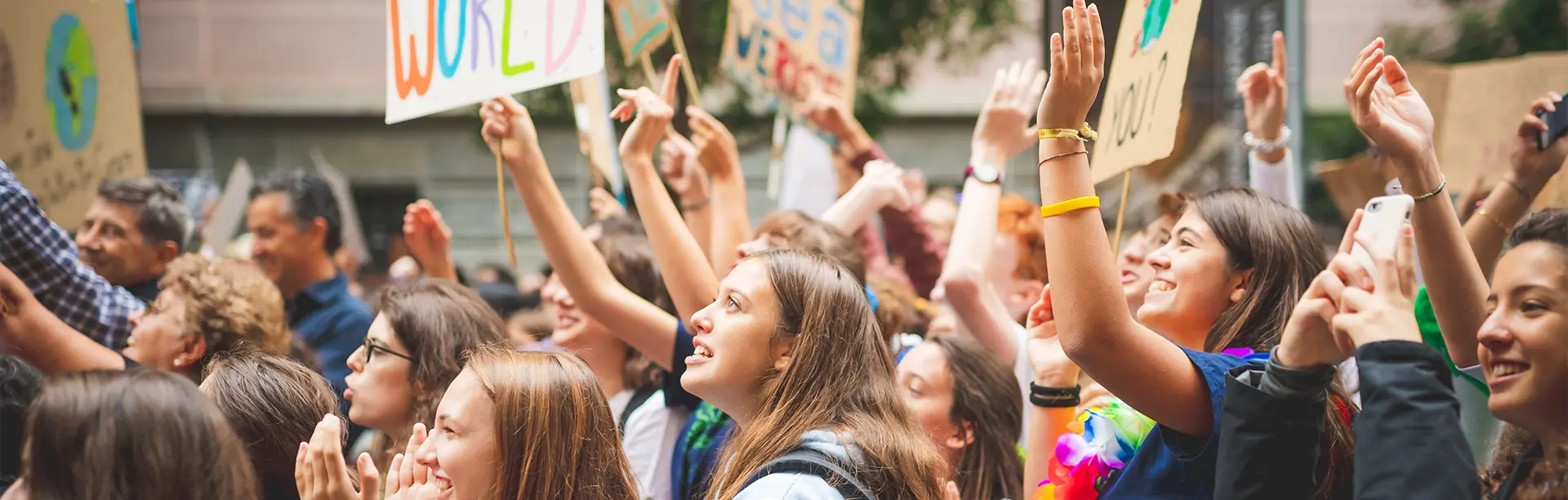
When thousands of young people took to the streets under the slogan Fridays for Future, they did so without waiting for anyone’s permission. The same happened with other movements for equality, mental health, or LGTBIQ+ rights. New generations mobilize with speed, authenticity, and purpose, using social media as their platform and horizontal collaboration as their main strategy.
Their drive has redefined the way we understand social action. Today, young people no longer need NGOs to organize themselves, but NGOs can play a key role: amplifying the impact of these movements, connecting with their energy, and supporting them with experience and structure.
How can NGOs collaborate with a youth that mobilizes on its own? The report Youth and NGOs: The challenges of collaboration between NGOs and young people, prepared by the Esade Institute for Social Innovation in collaboration with PwC Foundation, analyzes how the relationship between both is evolving and what learnings emerge from this alliance with transformative potential. Its authors, Mar Cordobés, Ignasi Carreras, and Maria Sureda, warn that the question is no longer whether to collaborate or not, but how and when to do so.
Causes, values, and new ways of mobilizing
The social commitment of new generations is undeniable. Today’s young people actively participate in causes they feel are close and urgent: climate justice, gender equality, mental health, access to housing, and the defense of human rights and minority groups.
Young people's social commitment responds to a more emotional, identity-based, and direct form of participation
Their way of acting moves away from traditional channels. Social media is their natural space for meeting, organizing, and mobilizing, where causes spread at great speed and collective actions are coordinated with agility. They also seek coherence and value transparency: they want the way things are done to reflect the values they stand for.
This coherence explains their mistrust of traditional institutions, which they perceive as more hierarchical or slow-moving. They prefer horizontal and collaborative structures, where decisions are made collectively and impact is tangible. Their engagement responds less to the logic of formal volunteering and more to an emotional, identity-based, and direct form of participation. NGOs that understand these dynamics and know how to adapt gain legitimacy and a stronger connection with this generation that demands authenticity.
From guardianship to support: new relationships between NGOs and activism
For decades, NGOs were the main channel for citizen participation in social causes and solidarity. Today, that role has changed. Organizations are no longer the starting point of social action, but rather a possible partner, an ally that can provide structure, experience, and networks to movements that emerge from the grassroots. The challenge, as the report points out, is to move from guardianship to support: to accompany rather than direct.
In this new balance, each party contributes essential value. Young people bring energy, innovation, agility, and commitment, as well as a special ability to communicate, connect, and build community, while NGOs provide experience, resources, and their capacity for policy advocacy.
The potential lies precisely in this combination: the transformative energy of youth activism, combined with the solidity and operational and organizational capabilities of NGOs, can generate a greater social impact than either could achieve alone.
In this new model, successful collaborations are those based on mutual trust, flexibility, and a real recognition of each actor’s capacities.
Synergies that work: when NGOs amplify youth activism
More and more NGOs are learning to act as amplifiers of youth activism, using their resources to support youth-led initiatives.
One example is the support provided by various organizations to Fridays for Future (FFF). NGOs such as Greenpeace and Oxfam assisted in the planning and execution of the movement’s demonstrations, offering their resources and experience in mass protests. They also participated in various legal initiatives, together with Ecologistas en Acción, filing lawsuits over government inaction on climate change. Others, such as Scientists for Future, provided scientific backing, advising with information based on current climate research. The overall goal: to help emerging causes gain reach and institutional credibility, without losing their autonomy.
The new form of social innovation is collaborative, intergenerational, and based on the exchange of knowledge
At the same time, youth movements are acting as catalysts for change within NGOs themselves, driving their internal renewal and pushing them toward more dynamic, horizontal, and open structures. This is how Greenpeace handed over control of its social media channels to Fridays For Future in May 2019, in order to help spread their messages to a broader and more diverse audience. Ultimately, working together to go further.
In fact, some organizations have begun to create youth participation spaces within their own structures, developing campaigns together with activist collectives. This collaborative model, based on listening and co-creation, is generating shared learning: NGOs discover new ways of operating and connecting with society, while young people gain access to resources and tools that amplify their capacity for action, as well as opportunities to learn and develop skills. This is the case of Amnesty International Chile, which, through its collaboration with young activists, created the Global Strategy for Children and Youth under the slogan “Youth, Strength, Action!”. Together, they not only work on projects focused on human rights, but also on ensuring their evaluation and subsequent implementation.
In the background, a new form of social innovation is taking shape: collaborative, intergenerational, and based on the exchange of knowledge and experiences. When NGOs and young people work together with a “movement mindset”, social action becomes more vibrant, more connected, and more transformative. And the common good benefits from it.
Barriers to change: generational gap and structural challenges
This collaboration process is not free of tension. The report identifies several challenges that limit its consolidation:
- The mistrust of many young people toward NGOs, perceived as slow or bureaucratic, compared to their preference for more agile and horizontal models.
- Differences in style: while NGOs usually plan in the medium or long term, youth movements tend to operate around objectives, short-term projects, and immediate actions.
- Funding and autonomy difficulties, which also weigh heavily, especially when financial support may condition the independence of activism.
- Generational gaps and the lack of diversity within organizational structures, which hinder the full integration of young perspectives into decision-making.
In the face of these challenges, the report highlights the importance of building flexible alliances based on shared values, capable of balancing institutional support with youth autonomy. Only in this way can collaboration avoid becoming subordination or dependency.
Toward a new culture of social collaboration
The relationship between NGOs and youth activism is moving beyond an instrumental link to become a strategic opportunity at multiple levels. Instead of competing for leadership of social causes, both sides can build a new, more open, decentralized, and participatory culture of collaboration.
These alliances not only function as tools for social impact, but also as spaces for civic learning and active citizenship. Young people develop leadership and collaboration skills, and NGOs rediscover their capacity for adaptation and innovation.
New generations are not only demanding a different future — they are learning to build it now. And this poses a clear challenge for NGOs, for institutions, and for today’s leaders: to listen, to facilitate, and to learn from a youth that is setting the pace of social change.