God’s blessing
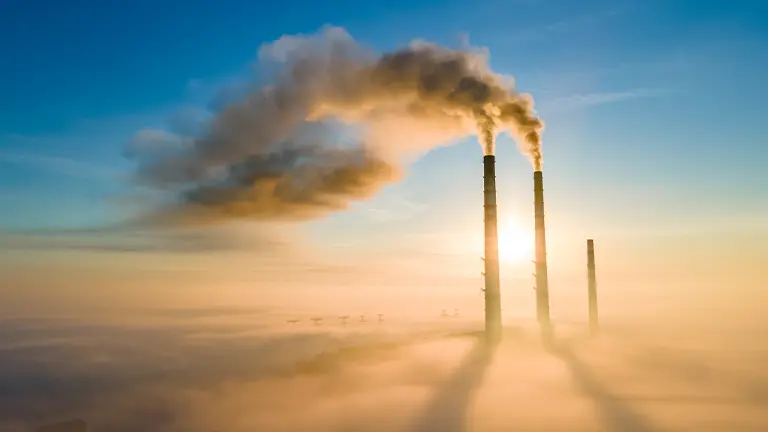
At the start of COP29, the president of Azerbaijan referred to fossil fuels as a "blessing from God." Perhaps spirituality has a role to play in the climate crisis, but in a different sense.

It was predictable that the 29th United Nations Conference on Climate Change (COP29) would not significantly impact international policies. On the one hand, for the third consecutive year, the conference was held in a predominantly oil-producing country with interests contrary to the COP's primary goal. On the other hand, just a week earlier, Donald Trump won the U.S. elections, having made his position on the matter clear during his campaign: he does not believe in climate change. This set the stage for a lackluster outcome, and as expected, there was little to report.
The prosperity enabled by fossil fuels has come at the cost of the planet's natural capital
While COP28 in 2023 concluded with Sultan Ahmed Al Jaber's (President of COP28, Minister of Industry of the United Arab Emirates and CEO of the Dubai National Oil and Gas Company-ADNOC) remarks encouraging his successor to achieve what his own conference had not, the opening words of Azerbaijani President Ilham Aliyev at COP29, calling fossil fuels a "blessing from God," did not inspire confidence that the postponed work would be tackled in Baku. Additionally, the new president of the conference, Mukhtar Babayev, Azerbaijan’s minister of ecology and natural resources, had spent most of his career in the oil industry. Two similar conferences, not very different from COP27 in Sharm El-Sheikh.
No one can doubt that fossil fuels have accelerated global economic prosperity and advances that have improved the lives of hundreds of millions over the past decades. However, we now know these advances have been achieved at the expense of the planet’s natural capital and the goods and services it provides. Fossil fuels, that so-called "blessing from God," have brought us to a crossroads: to either continue "improving” as before, postponing the management of negative consequences, or to address these consequences more urgently and improve in a different way. In a polarized world where little seems true or false and systemic inertia prevails, this dilemma is highly complex.
COP29: One more failure?
Every year around this time, I am asked to write an essay on the conclusions of these conferences. This year, we could almost copy last year’s. While there was some discussion about commitment levels for financial aid to poorer countries to combat climate change, the $300 billion pledged for climate financing (though not guaranteed) fell far short of the $1.3 trillion requested by developing countries, leaving the conference feeling like a failure. As with the previous summit, no decisions were made to set deadlines for reducing oil and gas production, though there was some progress in developing carbon credit transactions between countries and monitoring them to support a global carbon market. As expected, there were no advances in reducing fossil fuel subsidies or addressing externalities through other economic tools. Finally, very few words were dedicated to nature conservation and its relationship to the climate, despite the United Nations Biodiversity Conference (COP16) being held just half a month earlier in Cali, Colombia.
The flash floods in Spain prompt rethinking adaptation measures, improving preventive management, and spatial planning
It is clear that 2024 will not be remembered for COP29. In our country, Spain, it will be remembered for the catastrophic consequences of the well-known DANA (Isolated Depression at High Atmospheric Levels) which caused devastating flash floods last October in the Valencian Community, claiming 227 lives and caused an estimated €4 billion in losses. The Valencia DANA thus joined a grim global list of climate-related extreme weather disasters recently highlighted in Christian Aid’s report, Counting the Cost 2024: A Year of Climate Breakdown. Such events are clearly increasing. The DANA necessitates rethinking climate adaptation measures, improving preventive management, and spatial planning.
Five years ago, I wrote on this platform about the Gloria storm, concluding that it was better not to call it exceptional but rather unusual. Between Gloria and this year's DANA (which could have been named Caetano), we also had Filomena. In less than five years, Spain has experienced three major storms with varying impacts, all with human losses—although none as severe as the last. This has occurred with a global atmosphere warmed by almost 1.2ºC above the 1950-1980 average. We must be acutely aware of what we will face sooner rather than later—unusual events with much shorter return periods, occurring in an atmosphere that will warm above 1.5ºC (within ten years?) or 2ºC (in twenty years?), unleashing greater energy during such events. The laws of physics do not bow to international policies or human behavior. We must normalize these events and implement effective adaptation actions: avoiding activities in areas highly vulnerable to climate risks, such as floodplains (it is time to rebuild with intelligence and perhaps leave those spaces that we have occupied and that the water will recover sooner rather than later).; improving risk management for extreme weather events; restoring degraded natural environments (the European Union's restoration law can help); and, most importantly, to protect nature that has not yet been excessively altered, which could assist us in the future but is often overlooked.
To address global environmental problems, planning is essential, but rethinking our behavior as a society is even more urgent, and in our case, as educators, we must also teach and promote this shift. There are more of us, we do more things, and we cannot continue acting as if nothing is happening. We are witnessing changes in the biophysical functioning of the planet, and we must respond. We need a social paradigm shift that should begin with each of us, especially those of us who have far more than we need to be happy. We must be capable of changing our relationship with the habitat we live in and breaking free from the false sense of a protective bubble in which we find ourselves—a point I referenced last year on this platform. We must rise to the occasion, give our best, and care for our common home.
Perhaps it’s time to rely more on spirituality than economics to address the climate crisis
God’s blessing should not be mistaken for using oil to enhance our global sense of well-being. If misused, this "blessing" could lead to unimaginable disasters, forcing us to manage the impossible. Instead, God’s blessing should be understood as the ability to inhabit this common home, our planet. Twenty years ago, Pope Francis’ encyclical Laudato Si made this clear by calling for the "care of our common home," an imperative for humanity that requires more education. In recent years, not only Christianity but also other religions like Islam and Hinduism have taken positions on this issue. Perhaps it is time to demand that solutions to the global climate crisis rest more on spirituality than economics. And it should be noted that for those who might claim less religious or atheist positions, this does not necessarily exclude spirituality.
We must address the environmental and climate crises from the individual level, developing a worldview and actions that are more ecocentric than anthropocentric in seeking solutions to the problems we have created. This is the vision I hope COP30 in Brazil will adopt so that next year we won’t have to write about "another Groundhog Day COP."